Proud and Prudish
If you can only visit one city in Southeast Asia, it should be Hanoi. To visit Hanoi is to steep yourself in history, tradition, and legend in a capital that has been inhabited continuously for a millennium. Hanoi's present architecture is mainly from the 19th and 20th centuries, and the stately French-built section of town is largely intact. Hanoi is cleaner, leafier, and quieter than other big cities in Vietnam — in a word, it's "cooler." There's cooler weather, more drizzle, less traffic, less hype; the streets seem quieter, with few large billboards. There's a cooler mentality here, too-prouder, more prudish. Hanoi is a magnet for intellectuals and artists, while Saigon seems to attract entrepreneurs and hustlers.
Hanoi street life is fascinating. In the morning, you may see tai chi practitioners, martial arts exponents, badminton players, and joggers along Hoan Kiem Lake. Bicyclists wearing berets ride past with baguettes tucked into their baskets. Strolling through the old French sector, you can find a street occupied by outdoor barbers clipping their customers in front of mirrors hung off building walls. On Trang Tien Street there's a beautician at work: a woman with a flashlight mounted on her head, cleaning a customer's ears. At street corners in the Old Quarter, men with green pith helmets chat over steaming bowls of noodles. Farther along the street, women sell fresh-cut flowers from the backs of bicycles.
The City Rises—History of Hanoi
Although the banks of the Red River have been inhabited for thousands of years, Hanoi traces its founding to 1010—the year Emperor Le Tha 16th moved his capital from Hoa Lu to this site. He named the town Thang Long, or Soaring Dragon, after an auspicious dream about a dragon arising from the city.
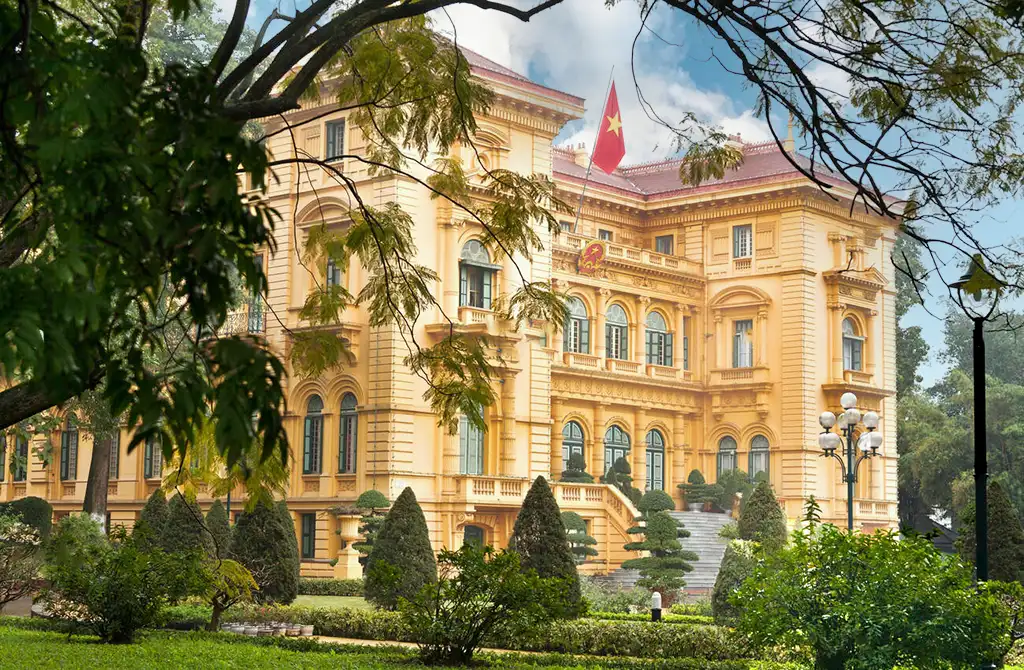
Originally, Hanoi was laid out in a patter dictated by Chinese geomancy. At its center was a walled royal city with a cosmic moon Lain; ceremonial rites and recreational function took place in this zone. The One Pillar Pagoda was constructed in 1049 and the Temple of Literature, located to the south, was the first educational institution in Vietnam, established it 1070. East of the citadel and north of Hoan Kiem Lake was the artisan and commercial area now the Old Quarter. On the other side of the lake, east and south, was the quarter for visiting residents which later became the French zone
In the 12th century, palaces built by Ly dynasty emperors sprouted along the Red River and around West Lake and the city was protected from Red River flooding by construction of massive dike, still prominent today. Though flooding was contained the Vietnamese could not keep out the Mongols and in the late 13th century the Mongols sacked Hanoi. For the next hundred or so years the city's fortunes fluctuated. In 1428, Vietnamese leader Le Loi ousted the Chinese from the area and renamed the city Dong Kinh (Eastern Capital), later corrupted by the French into "Tonkin.”
From the 16th century on, the city fell into period of decline, culminating in the shifting the imperial court to Hue far south on the central coast. In 1805 Emperor Gia Long, ruling from Hue, ordered the ancient citadel of Thang long destroyed, replacing with a smaller citadel constructed by French military architect Sebastien de Vauban. In 1831, Emperor Duc renamed the city Hanoi, or City on the Bend of the River. This strategic bend attracted the French, who were investigating the Red River as an alternate trade route to the Mekong for shipping goods from China and in 1873 Francis Garnier was sent to reconnoiter in the area. After negotiations with the Emperor failed, Garnier attacked and destroyed the Hanoi Citadel. Upon seeing what a small French force could accomplish, Tu Duc acceded to French demands. Many old structures in Hanoi were razed to make way for new French buildings. From 1882 on, Hanoi and Haiphong were the focal points of French exploitation of the north, and Hanoi was made capital of the new French protectorate of Tonkin.
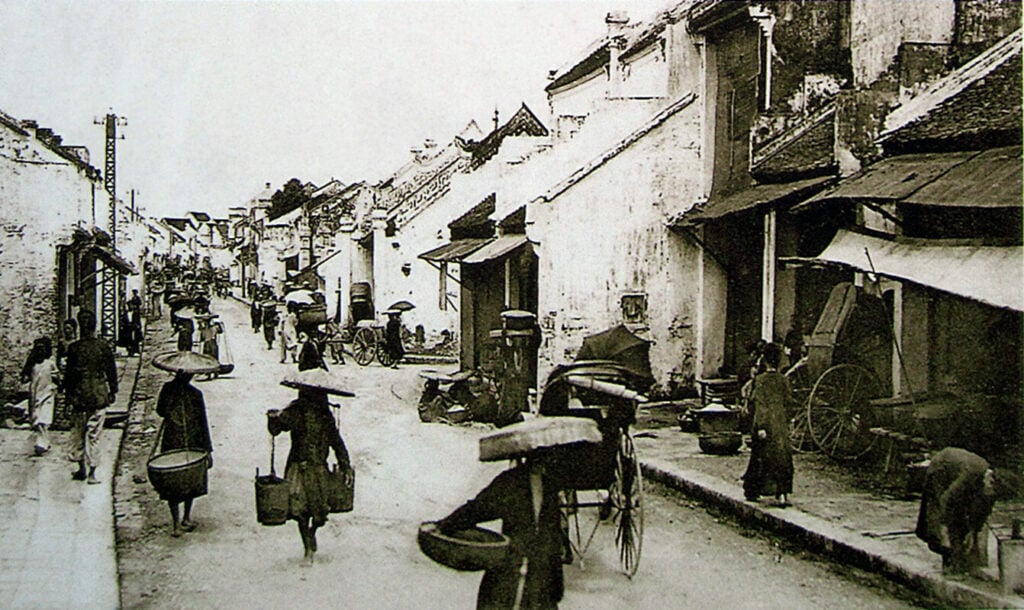
In 1902, after a merger of French protectorates and colonies, Hanoi was selected as the capital of the French Indochinese Union. It was a convenient base for exploring China routes and its climate mild in comparison to Saigon. French colonial rule came to a humilating end in 1954 after the French military defeat at Dien Bien Phu. President Ho Chi Minh then set about expanding Hanoi's industrial base. The tragic American War followed, dividing the country and leading to the death of millions over the ten year conflict. Fortunately, the war spared the Old Quarter and Hoan Kiem District.
Cessation of hostilities led to rapid migration back to the capital. Today Hanoi is one of three independent municipalities in Vietnam, covering an area of 2,139 square kilometers. The inner city is distributed in four districts and Greater Hanoi comprises 11 peripheral districts. The present population is estimated at 8.5 million, almost triple of 20-30 years ago.
A Tale of Two Cities: Hanoi and Saigon
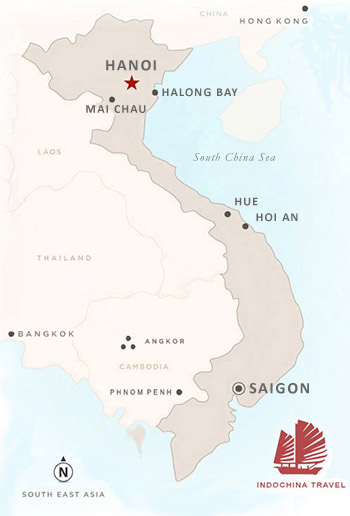 |
For centuries Hanoi was the city of primary importance in Vietnam. As the capital of French Indochina, it was a center of Vietnamese political, cultural, and economic life. During the French colonial period, Hanoi was famous for its restaurants and stylist upper class. After independence, the Hanoi region became a manufacturing center with first-rate schools and hospitals. Its several hundred thousand residents suffered many hardships in their struggle with France, but still fought on to eventually unify the country. The Communists made the city the Democratic Republic of Vietnam capital in 1954, but South Vietnam's capital, Saigon, soon passed Hanoi in wealth and population size.
A major commercial center, Saigon had long dominated southern Indochina's social and commercial lifestyles. As South Vietnam's military headquarters, Saigon boomed during the American War from American financial aid and the war economy. While Hanoi's streets were busy with bicycles and handcarts, Saigon's roared with automobiles and motor scooters.
Under French rule, Saigon became a modern city with a powerful Vietnamese Roman Catholic elite while most Vietnamese remained Buddhist. At the founding of the Republic of Vietnam in 1955, President Ngo Dinh Diem made Saigon the capital. The city grew rapidly as over 900,000 northern Vietnamese fled Communist North Vietnam. U.S. money flowed into the RVN government and military, enriching the city's ruling class. Saigon was notorious for government corruption, gambling dens, prostitution, and the opium trade. By 1965, the city's population was 1.5 million and growing. During your travels, observe the still very distinct personalities of the north and south.
Hanoi at the Crossroads
Hanoi today is a city on the brink of transformation. With the opening of Vietnam to tourism and joint-venture projects, developers envision at Hanoi studded with high-rise buildings. Land of prices in Hanoi have skyrocketed to among the highest in the world. Bids are in for 20- and 30-story office towers and apartment blocks in central Hanoi and even the conservatively-paced Hanoi People's Committee wish list includes 5,000 hotel rooms for businesspeople around West Lake. Cars and trucks are challenging bicycles and scooters as the primary mode of private transportation. Electronic goods, previously hard to come by, are now flooding in from China. Visit before the transformative changes to come.
Neighborhoods & Orientation
Hanoi, a city of distinct neighborhoods, is also a city of lakes. Once you sort out the lakes, it's easy to find your way around. The heart of Hanoi is the district around Hoan Kiem Lake. North of Hoan Kiem Lake is the Old Quarter, a fascinating jumble of alleys teeming with life and, unfortunately on some streets, buzzing traffic. Around the southern and eastern side of the lake is the former French zone, with cream-colored offices and green-shuttered apartment blocks and villas. Here you'll find the Opera House and former palatial residences. This is also the main commercial district, with large hotels, banks, department stores, art galleries, and shops.
In the northwest of Hanoi is Ba Dinh District, taking in the area of the former citadel. Little remains of the citadel, though the area is stills used by the military and houses the Ministry of Defense, the Army Club, and other bodies. Speaking of bodies, Ho Chi Minh's mausoleum is out this way, along with the Ho Chi Minh Museum, and high-priced villas used by Eastern European embassies. The area is leafy and green, with wide boulevards-ideal for bicycling: The Ba Dinh District also encompasses Giang Vo Lake, an area of nascent four-star hotels. In the north end of Hanoi are True Bach Lake and West Lake (Ho lay), two exclusive residential zones. West Lake offers low-key recreational facilities and is a relaxing place to go boating.
Hanoi Sightseeing
HOAN KIEM LAKE
Hoan Kiem, or the Lake of the Restored Sword is the center of Hanoi, both in spirit and in geographical location. You can bicycle or stroll around the lake, as thousands of Hanoians do on weekends. At the crack of dawn locals assemble on the thin parkland perimeter for an hour or so of tai chi, jogging, dancing, and badminton.
Associated with the lake is an Arthurian-type legend. In the early 15th century, so the story goes, a humble fisherman named Le Loi asked the heavens for help in resisting the Ming dynasty Chinese who occupied the north. A golden turtle from the lake then brought him a magic sword that flashed like lightning. After leading at insurrection against the Chinese, Le Loi returned to the lake, and the turtle reclaimed the sword.
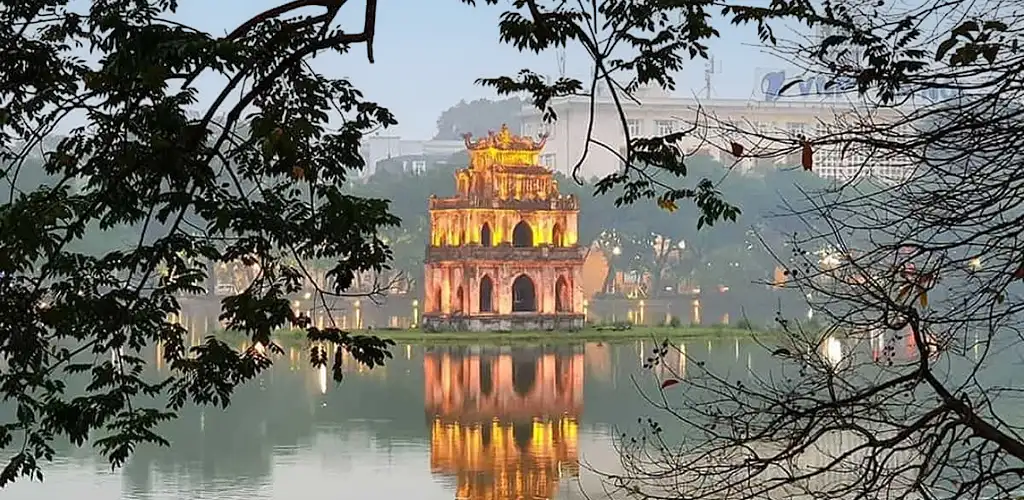
At the northern end of Hoan Kiem is Ngoc Son Temple, reached by the bright red Sunbeam Bridge, an arched Chinese-style wood en structure built in 1855. Before crossing the bridge you pass Penbrush and Inkslab towers built in 1864 to commemorate the learned school at Nguyen Van Sieu. Ngoc Son Temple is a mixture of temples and gift shops, and is the desired place for Vietnamese to have their pictures taken. Built in the early 19th century, it has undergone a few renovations, most recently in 1994. The temple honors several Vietnamese icons, including Van Xuong, the god of literature; Quan Vu, a martial arts exponent; physician La To; and 13th-century hero Tran Hung Dao. At the back of the shrine is the preserved body of a huge turtle found in the lake in 1968. It weighed 250 kilograms and was believed to be 400 years old-some say 500 years old, to make it old enough to serve as the turtle of legend. On an islet at the south end of the lake is a dilapidated three-tiered tower, built in honor of the valiant turtle. Turtles are occasionally still sighted in the lake. On the west bank, next to the ANZ Bank, is a small temple with a statue of Le Loi.
There are several other pagodas in the vicinity of the lake. Popular with locals is Bada Pagoda, or Heavenly Mistress of the Stone, to the west of Hoan Kiem on Nha Tho Street. The pagoda was built in the 15th century after the discovery of a stone statue of a woman. The statue, imbued with magic powers, disappeared and was replaced with a wooden replica. The pagoda bears bonsai trees, oriental vases, and an impressive array of Buddha statuary.
Hanoi by Cyclo
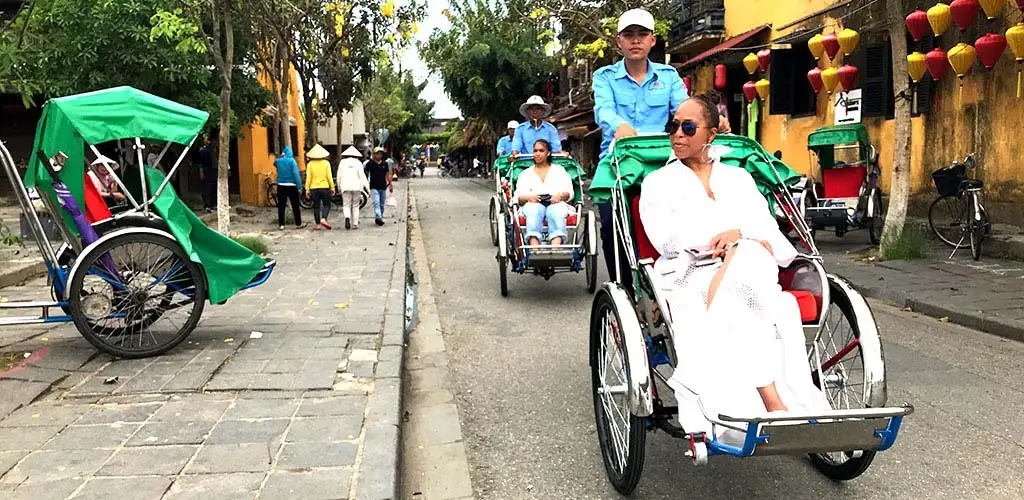
While many cities in Asia have abolished pedicabs and rickshaws, "cyclos" are still popular in Hanoi for locals and visitors alike—for good reason, it's one of the most pleasant and thrilling ways to see the city. Sitting up front (there is enough seating for two), you may take in the take in the city unobstructed, an ideal vantage point for photos and videos. For a break, Stop with your driver for an egg coffee during your journey.
Hanoi Arts

Water Puppets
One of the top attractions for families in Hanoi is water puppetry, an exuberant traditional performence art form accompanied by music intended for children, but often is a delights for adults. Unique to Vietnam, it's seen regularly only in the north. The exact origins of water puppetry are uncertain, but it's known the Red River Delta area nurtured and preserved this traditional theater over many centuries.
The traditional water puppetry repertoire include up to a hundred short skits. A 75-minute performance usually presents 15 to 20 short pieces, derived from fables, local legends, historic events, or adapted from popular theater. Such mythical animals as the phoenix, lion-dog, unicorn, and dragon are often shown in aquatic dances. Satirical takes at rural life are common. You may catch the story of the magic sword, a mixture of myth and history similar to the Arthurian legend of Excalibur. For a more intimate experience, especially with children, we can arrange a private puppet performance in a studio of a puppet master or enjoy a private performance of the delightful music of the puppet theater, also in a private studio space located in the Old Quarter.
Hanoi is the home of the country's top artists, the bohemian capital being more stoic, moody and less commercial minded than Saigon in the far south. We can arrange private studio visits with a variety of premier artists, writers, and intellectuals, across differing styles of art, including lacquer, unique to Vietnam. For collectors, finer Vietnamese works are a bargain realtive to most other destinations in Asia.
HANOI'S HISTORIC OLD QUARTER

A stroll through Hanoi's fascinating and chaotic Old Quarter will quickly lay to rest the conception that the city is gray, dull, reserved, and austere. In the anarchic jumble of the Old Quarter thrives a lively commerce in trade and handicrafts as well as lively cafes and street dining. The place is full of character - and characters. You might come across a woman trundling down a street with a shoulder pole of dual baskets bearing porcelain, or an old woman who reveals blackened teeth when she smiles, or a group of men crouched over bamboo bongs at tiny sidewalk stools. The quarter is a medieval maze of alleys lined with shops, homes, and cafes. It's a fascinating area to stroll, this compact urban area that is one of the most densely populated in the planet.
Formally, the Old Quarter is known as the Quarter of the 36 Streets. East of the former citadel was the artisan and merchant quarter; in the 15th century, workshop villages clustered around this area to satisfy the royal court's need for quality products. Houses and shops stood side by side in this royal city, in a cooperative system like that of imperial Beijing or medieval Florence. Guilds worked together to transport merchandise from outlying villages, often along the Red River. Guild names were applied to these streets—Silk Street, Paper Street, Basket Street, etc. Each guild maintained its own pagoda and patron deity; most of these "community centers" have since been turned over to other uses such as schools. Many street signs in this district begin with Pho Hang. "Pho" means "alley," "hang" means "shop" or "merchandise," and "bac" means "silversmiths," so Pho Hang Bac refers to the alley with the shops of silversmiths.
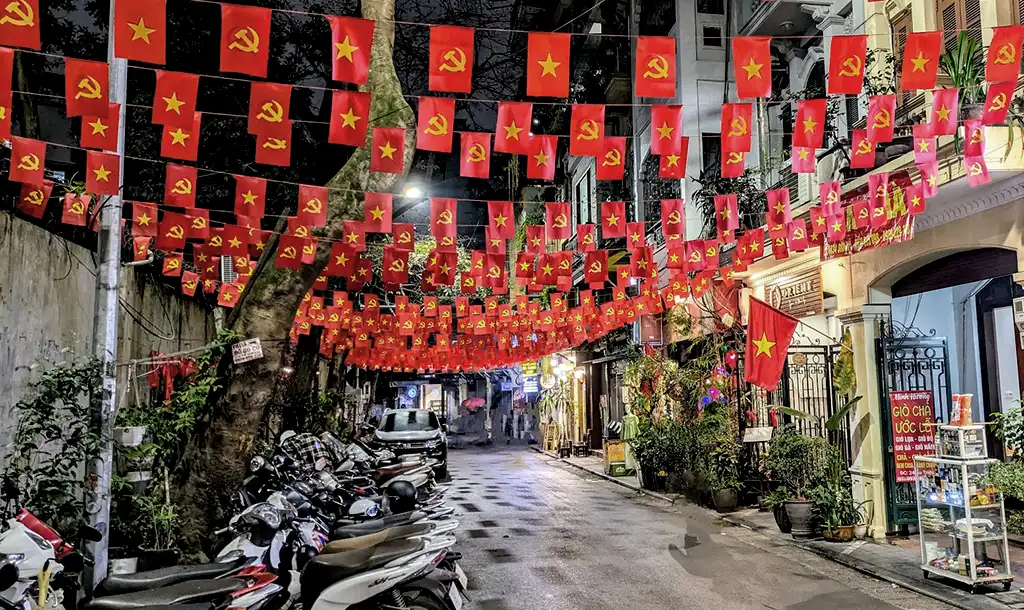
Most guild streets are now concerned with trades - retail shops, tailors, repair shops. Trades have changed with the times you'll find entire streets given over to the sale of Russian watches, smuggled cigarettes, bootleg whiskey, motorcycle parts, shoes, pillows, Korean-made luggage, and Chinese thermos flasks Increasingly, parts of the Old Quarter are dedicated to mini-hotels, street cafes and restaurants.
One thing that hasn't changed much in the Old Quarter is the size of its shop houses. Shop were taxed according to the width of their marked frontage, so crafty old Hanoians built narrow shop fronts with long narrow homes behind them containing living space and storage. These red tiled three- or four-story structures are called “tube houses,” as they're only three meters wide a the front, but up to 60 meters deep. The local government is formulating plans to preserve the Old Quarter from demolition or alteration, a developers have their beady eyes on this sector, dreaming of high-rise buildings. The Old Quarter is in surprisingly good condition, with few changes to the original layout and it has been recognized by UNESCO as an important heritage site.
Hanoi with the Kids

Pondering whether Hanoi is worthwhile with or what to to with your children, young and old, in the capital? We're here to tell you it is one of the most remarkable cities in the world for kids of all ages! Fascinating street life, attractions, and special places, people, food, and activities we will plan will make it one of the most thrilling travel experiences your children will ever have. Most of Vietnam's destinations feature enjoyable activities for children, but Hanoi offers many captivating and unique cultural experiences not found outside the capital, from meeting with lacquer artist to learn about the art form hands-on, exciting cyclo tour of the Old Quarter, learning traditional water puppets from a master, attending a wild TNT soccer match, cycling the Red River Delta, dropping into a local classroom to teach an impromptu English lesson, or performing with the Hanoi Traditional Opera troupe in their Old Quarter theater (above).
Cycling Hanoi & the Red River

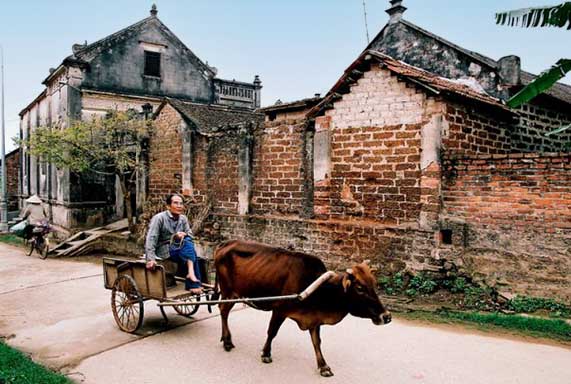
Cycling in Hanoi is not for everyone, certainly not the faint of heart, but we’ve been doing so since the mid-1990s. We can roll through quieter areas out near Tay Ho (the West Lake) and further out to the Red River Delta, visiting the last remaining historic villages outside the capital.
Hanoi Dining

The world has been out for awhile, Vietnam has some of the best cuisine in the world, from street food to formal. Unlike most cuisines in Asia, Vietnamese food is fresh and healthy, featuring an abundance of herbs and vegetables, lean meat, fresh seafood, and variety of exotic tropical fruit. Like most countries, Vietnamese food is distinctly regional, with variations between north, central, and south, and even between cities, such as Hue and Hoi An which have specific dishes and styles. Hanoi cuisine is marked by simplicity and many dishes and variations here are unique to the capital. There's a more casual flair to Hanoi dining, and though elegant places can be found, there's less a need to dress up and some of the best dishes, as Anthony Bourdain claimed in many of his shows, are found on little stools along the sidewalk. A selection if unique dishes and location are listed below, on our Hanoi street food walking tour.
What to eat and drink in Hanoi?
Start the morning with your guide enjoying a frothy and unqiue Egg Coffee near the central lake.
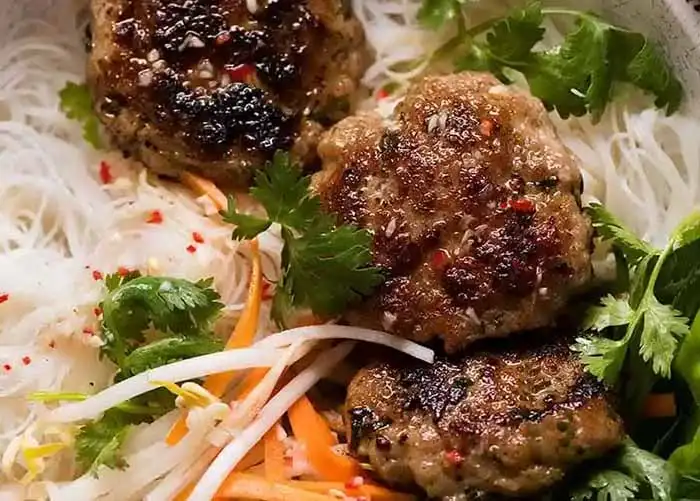
Don't miss the local specialty bún chả, featuring savory grilled pork patties and caramelized pork belly served over a bed of delicate rice noodles, fresh vegetables, and a dipping sauce. This was the dish Obama shared with Anthony Bourdain in Hanoi, though you may want to try a less busy spot than Bún chả Hương Liên where they dined. Another dish not to miss is Chả Cá Lã Vọng, a delicious boneless fried fish with turmeric and dill served in many specialty restaurants (but we know the best one). Sublime!
After a thrilling day exploring Hanoi, enjoy the country's best happy hour, or bia hoi as its called, when sidewalks cafes suddenly fill just after the work day has ended, full of raucous workers enjoying a fresh draft beer (bia) and snacks.

Hanoi Shopping
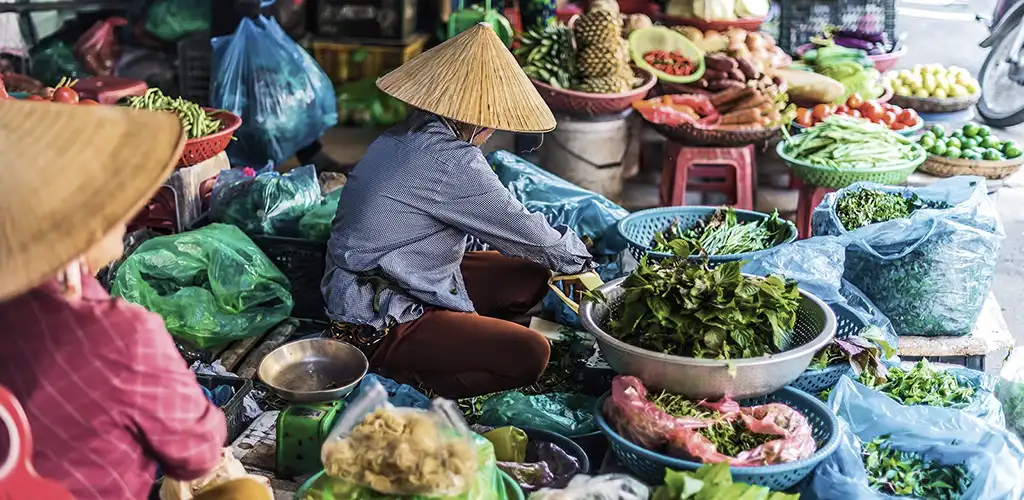
Saigon and Hoi An feature outstanding shopping, but in Hanoi is the place to browse for silk, pottery, handicrafts, lacquer products (those beautiful bowls you often see in at your local malls), fine art at very low prices, interesting trinkets, and wooden sculptures are top buys in the capital city. The Old Quarter features shopping along "guild" streets that focus on specific products, such as Silver Street (Hang Bac) or silk street (Hang Gai). Our guide will have recommendations to help find the perfect shop for you during your time in Hanoi.
Standout Shops in the Old Quarter
Hien Van Ceramics
This atmospheric family-run shop is located deep in one of Hanoi’s most elegant French-era mansions. After ascending the grand staircase, pass down the hallway past a cafe and the shop can be found on the left. The shop’s founder and lead artist, Bui Hoai Nam, comes from a family of ceramacists renowned for their sculptures, vases, cups and teapots. Address: 8 P. Chân Cầm, Hàng Trống, Hoàn Kiếm District.
Collective Memories
This "House of Curios" is a vivid trove of curiosities—hand-stitched and hand-painted clothing, wood-fired cups, board games, art prints, chili sauce, magnets, and much more. It’s the kind of place where a seasoned traveler could easily lose the entire afternoon. Like a living museum or gallery, the stock is thoughtfully curated and constantly evolving, showcasing a rotating cast of talented artisans to an international audience. Address: 12 Nha Chung Street, Hoàn Kiếm District.
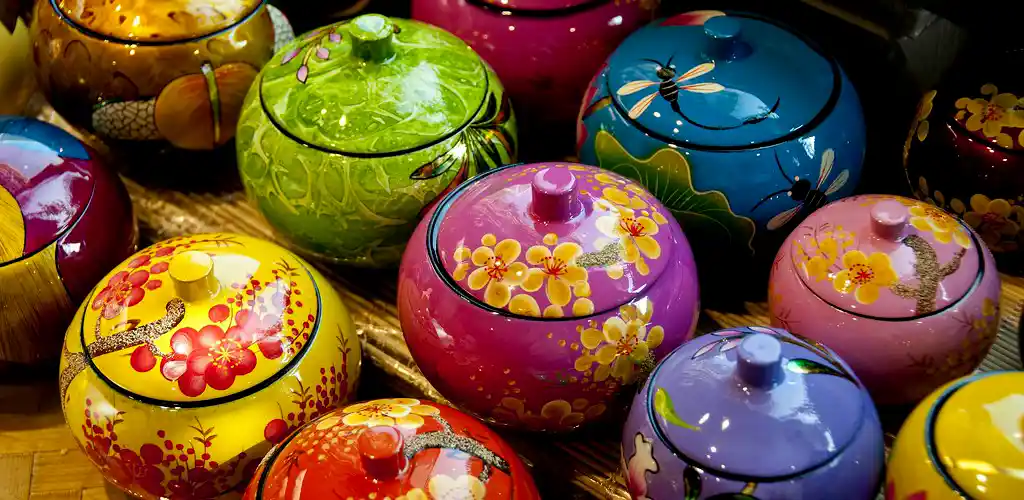
Hanoia
You may have seen lacquerware in your local shops, which comes from Vietnam and here's a chance to pick up some finer pieces at the source. With origins dating back thousands of years, lacquerware was once valued for its practical ability to strengthen and protect everyday items and Hanoia is dedicated to preserving and elevating the ancient Vietnamese art. Hanoia re-imagines this time-honored craft for modern audiences, sourcing unique pieces from skilled artisans from a historic village in Binh Duong Province—renowned for its lacquerware tradition since the 14th century. Address: 38 P. Hàng Đào, Hàng Đào, Hoàn Kiếm District.
TiredCity
Younger travelers will appreciate this place to browse casual, local art and fashion. TiredCity features original and unique work by local young artists and illustrators who receive proceeds from sales. Their collections include prints, apparel, tote bags, and stationery. Think of it as the contemporary counterpart to a traditional craft shop like Hanoia—every item features 100% original designs, with each purchase directly supporting a local artist’s career. Address: 37 Ng. Hàng Hành, Hàng Trống, Hoàn Kiếm Lake District.
Large markets in Hanoi
Dong Xuan Market, situated in the heart of the Old Quarter, is a sprawling wholesale market that offers excellent souvenir shopping featuring a wide variety of goods including trinkets, textiles, souvenirs, but also food, and everyday products. The alleys around Dong Xuan are also stocked with goods, selling everything from handbags, watches, knockoff clothing to glassware.
Long Bien Market is an authentic night time wholesale market with hundreds of stalls, the city's most important, where locals, restaurants, and smaller markets buy fresh seafood, meat, fruit, vegetables and wide variety of dried foods, which arrive early in the morning before sunrise. The markets food stalls feature delicious and cheap street eats, including banh da cua, pho, bun rieu, and banh gio.
Hom Market, a historic a traditional textile market, is the place to go for clothes and fabric, pre-made and custom. Ready-made products such as clothes, bags, and shoes are for sale. On the second floor are sandwich stalls, sweets and other fresh snacks. Address: 79 Pho Hue, Hai Ba Trung District.
Nghia Tan Market is Hanoi's famed food market, a place to sample fresh Hanoi cuisine, but also selling an immense variety of snacks and sweets.
From midnight to around 3 AM, Quang Ba Market and the alleys around it are transformed into a colorful tableau of bright, fragrant freshly cut flowers.
Hanoi Hotels

The Metropole
Its true what you've heard, the historic Metropole is the luxury place to stay in the capital for a number of reasons. [
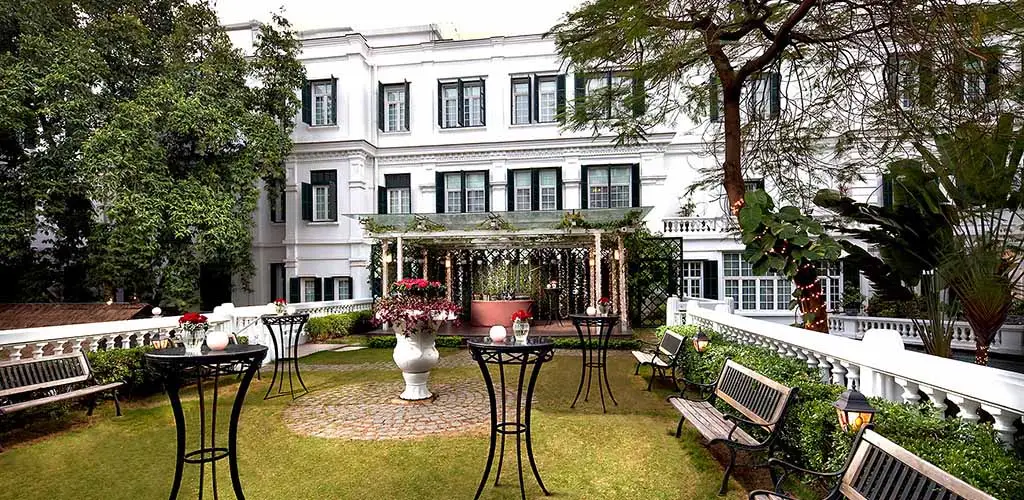
Over the last decade, Hanoi has seen a number of elegant boutique hotels open that offer compelling alternatives to finer luxury properties, including the legendary Metropole. These newer places may not offer the spacious public areas of the luxury hotels, but make up for it with key location in the vibrant Old Quarter, with highlights of the city just outside the lobby.
Sightseeing in Hanoi: Two Day Itinerary
Hanoi is worth at least three days, but you have lots of ground to cover in visiting Vietnam's many other charming places. Below is a brief sketch two-day program we recommend. However, our trips may include only some of this, but are rich with interesting personal encounters, activities, and other insider places most travelers miss.
Foremost, plan your trip to be in the capital during the weekend when a large part of Hanoi's Old Quarter becomes a busy pedestrian zone with street cafes, eating, and live entertainment.
Day 1: Historical & Political Heart
Morning: Ho Chi Minh Mausoleum- Ho Chi Minh Mausoleum: A striking tomb from the Soviet-era in Vietnam. See the preserved body of Vietnam’s iconic leader, Uncle Ho. (Arrive early —closed on Mondays & Fridays.)
- Presidential Palace & Ho Chi Minh's Stilt House: Stroll through lovely gardens and see where Ho Chi Minh lived in his simple stilt house.
- Artist Encounter: Enjoy tea in the private home of one of Vietnam's premier lacquer artists.
Note: Shoulders & knees must be covered for the mausoleum.
Late Morning: Hanoi by Cyclo- Many cities in Asia have banned pedicabs or rickshaws, but remain popular in Hanoi and the most thrilling way to explore central Hanoi.
- Enjoy delicious Hanoi pho the Bourdain way, at a locals only sidewalk cafe on foot-tall plastic stools.
- A brief stop at this historic prison.
- Attend a lively match of Hanoi's popular soccer team, TNT. With an introduction to the team.
- Explore the bustling weekend pedestrian zone in the Old Quarter.
- Cau Go Restaurant (casual, delicious, with rooftop views over the lake)
Day 2: Art & Local Life
Morning: West Lake & Red River
- This morning visit one of the vanishing historic village on the Red River, stopping into the home of a couple who have lived in the village for over 60 years in their traditional Mandarin style home.
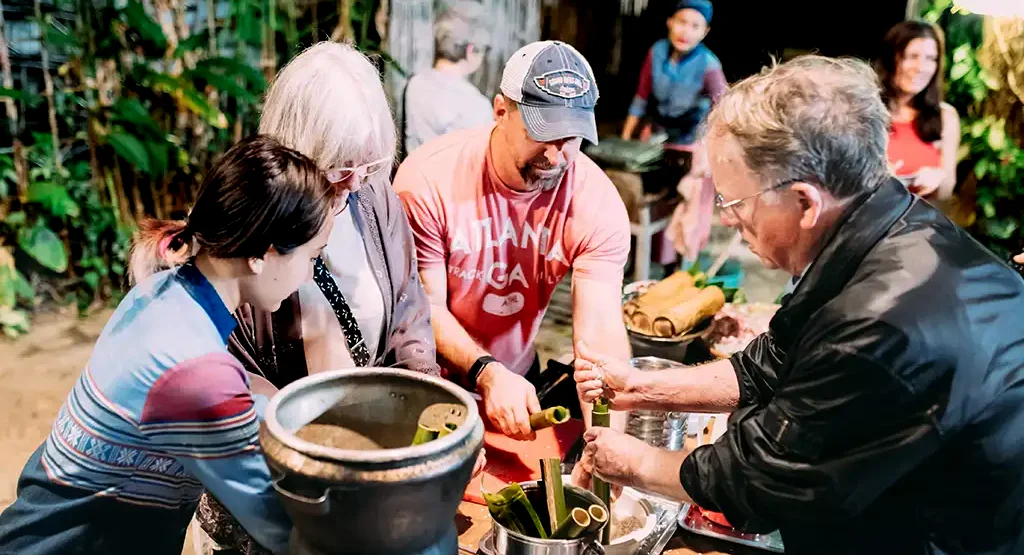
- Bun cha are savory caramelized pork meatballs. We'll stop into the kitchen of one of the Old Quarter's finest bun cha chefs, learning to prepare and dining on the dish.
- Vietnam's only world-class museum, cataloging Vietnam’s 54 ethnic groups with actual traditional stilt houses and variety of displays.
Late Afternoon: Old Quarter Shops
-
Explore the thousand year-old guild streets of the Old Quarter, including silk and silver streets.
- Quan An Ngon: unpretentious Michelin-star dining in the courtyard of an elegant French villa surrounded by real stalls preparing dishes you may watch.
- Witness street music, dancing and other attractions at the weekend walking area of the Old Quarter.
Destinations from Hanoi
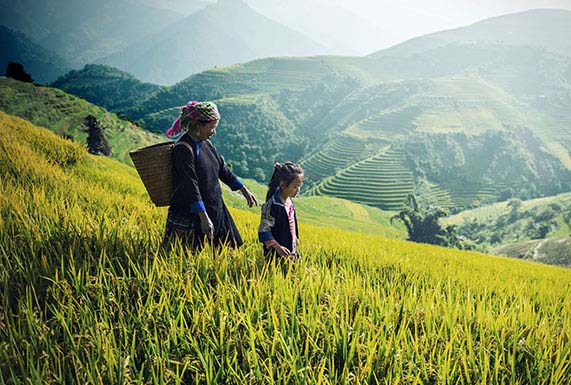
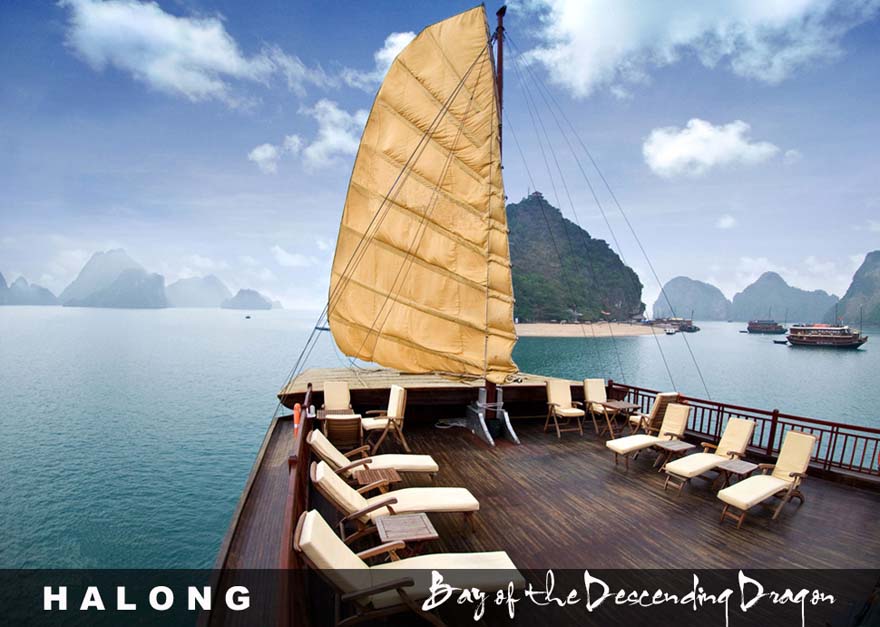
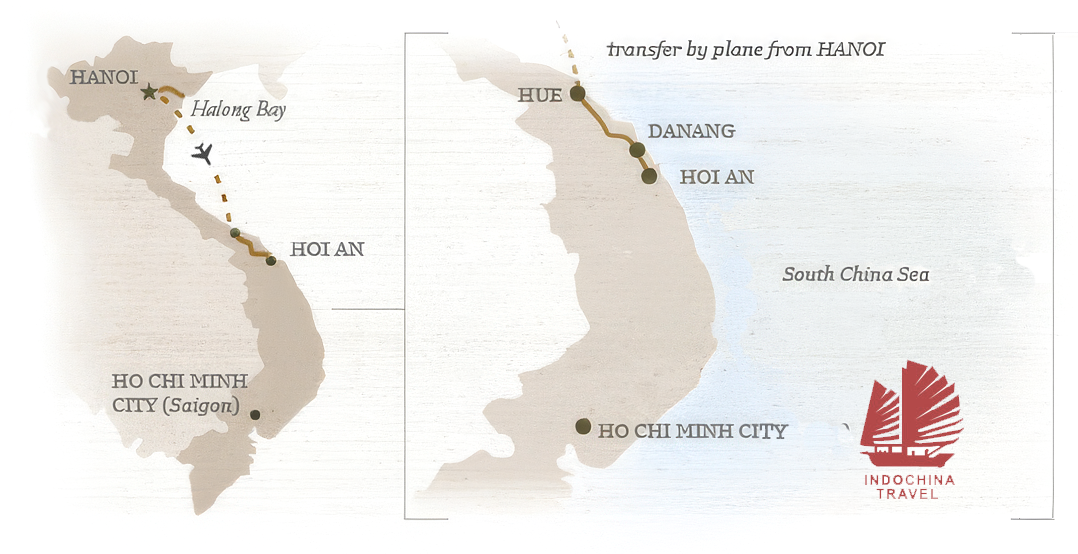
From the capital, explore magnificent Halong Bay, the picturesque mountains and hilltribes in the Northwest, and ancient villages lost in time.