What are the religions of Vietnam? It's a complicated answer, but in general most Vietnamese practice overlapping beliefs. While signs of Buddhism are found everywhere — temples, monks, and symbols — and although everyday Vietnamese will tell you they are Buddhist, the reality is a bit more complex.
In addition, over the last century, the Vietnamese government adopted communism, which Karl Marx believed to be the counter to religion, which he claimed was the “opium of the people,” employed by repressive regimes to divert the attention of the people from their true enemies.
However, Vietnamese religious practices that do not overtly challenge political rule are tolerated, counter to past conflicts with Catholicism and Buddhism. Vietnam, in recent decades, has seen more and more religious expression being allowed in the open, with many cathedrals erected throughout the Northwest.
Religion in Recent History
During the Vietnam War, dissident Buddhists mounted a campaign against the Catholic regime of Diem, who often accused Buddhists of maintaining communist ties, culminating in the immolation of monk Thích Quảng Đức in Saigon.
However, when they came to power, it was the communists who began repressing both Buddhists and Catholics by putting them under the control of state organizations: the Buddhist Church of Vietnam, and the Council of Union of Vietnamese Catholics. Schools, hospitals, and other institutions run by religious organizations were taken over after 1975, land owned by religious groups was confiscated, many religious leaders were sent to reeducation camps, and proselytizing was severely restricted.
Since the late 1980s the official stance has softened, with more freedom allowed to Catholics, Buddhists, and other groups. There has been a resurgence of worship in pagodas and churches throughout the country.
Buddhism
An estimated 60 percent of the population follows some sort of Buddhist beliefs, though considerably watered down from their original strength or mixed with other faiths. Both major schools of Buddhism are represented in Vietnam: in the north and the center, Mahayana Buddhism predominates (due to Chinese influence), while in the south, pockets of Theravada Buddhism prevail (due to Indian and Cambodian influence).

The government has historically replaced Buddhist teachings with communist ideology, weakening the power of the monasteries and eliminating Buddhist privileges, both isolating and discrediting the monastic leadership. Several Buddhist leaders have been detained and served sentences for acts such as "undermining the policy of solidarity," a national security crime in Vietnam's criminal code.

Buddhist Beliefs
Buddhism focuses on suffering—its causes and eradication. It is based on the teachings of Siddhartha Gautama, born around 560 B.C. in what is now Nepal. The essence of Buddha's teachings is the Eightfold Path, also known as the Middle Path because it steers a course between materialists and ascetics. The Path consists of right understanding, right thought, right speech, right action, right livelihood, right effort, right mindfulness, and right concentration.
The ultimate goal of Buddhism is cessation of suffering, or attainment of nirvana—enlightenment, ultimate truth, gaining of wisdom. Mahayana Buddhists work toward the enlightenment (and salvation from suffering) of all beings, while Theravada (Hinayana) Buddhists believe in the personal quest for enlightenment. Only those who dedicate themselves fully to the Path can attain enlightenment. For most adherents, the likelihood of attaining nirvana is remote because it requires such intense dedication.

A more humble pursuit involves redressing the balance of karma. Karma is cause and effect: good deeds have good effects; bad deeds have bad effects. Many Buddhists believe they may have inherited bad karma from previous existences, a situation that must be corrected by doing good deeds in the present life.
 Mahayana Buddhism was most likely introduced from China in the 2nd century A.D. It received royal patronage after the 9th century, and by the 12th century was promoted to the state religion. After a lengthy period of stagnation, Mahayana Buddhism underwent a major revival in the 1920s. In addition to faith in Buddha, Mahayana Buddhists believe in a vast array of bodhisattvas, or enlightened beings. Mahayana Buddhism is concentrated in the north and center of Vietnam; the most important sect is the Thien (Zen) meditation sect. Zen master Thich Nhat Hanh introduces the sect in Vietnam, Lotus in a Sea of Fire:
Thien (Zen) differs from orthodox religions in that it is not conditioned by any set of beliefs. In other words, Thien is an attitude or a method for arriving at knowledge and action. For Thien the techniques of right eating and drinking, of right breathing and right concentration and meditation, are far more vital than mere beliefs. A person who practices Zen meditation does not have to rely on beliefs in hell, nirvana, rebirth, or causality; he has only to rely on the reality of his body, his psychology, biology, and his own past experiences of the instructions of Zen masters who have preceded him. His aim is to attain, to penetrate, to see; once he has attained satori (insight) his action will conform by itself to reality.
Theravada Buddhism is concentrated in the south of Vietnam, in the Mekong Delta, where adherents are found in small numbers, mostly in Khmer communities. Theravada Buddhism was most likely introduced by Indian seafarers and later reinforced by Cambodian settlers. Theravada Buddhists claim to adhere to the original teachings of Buddha.
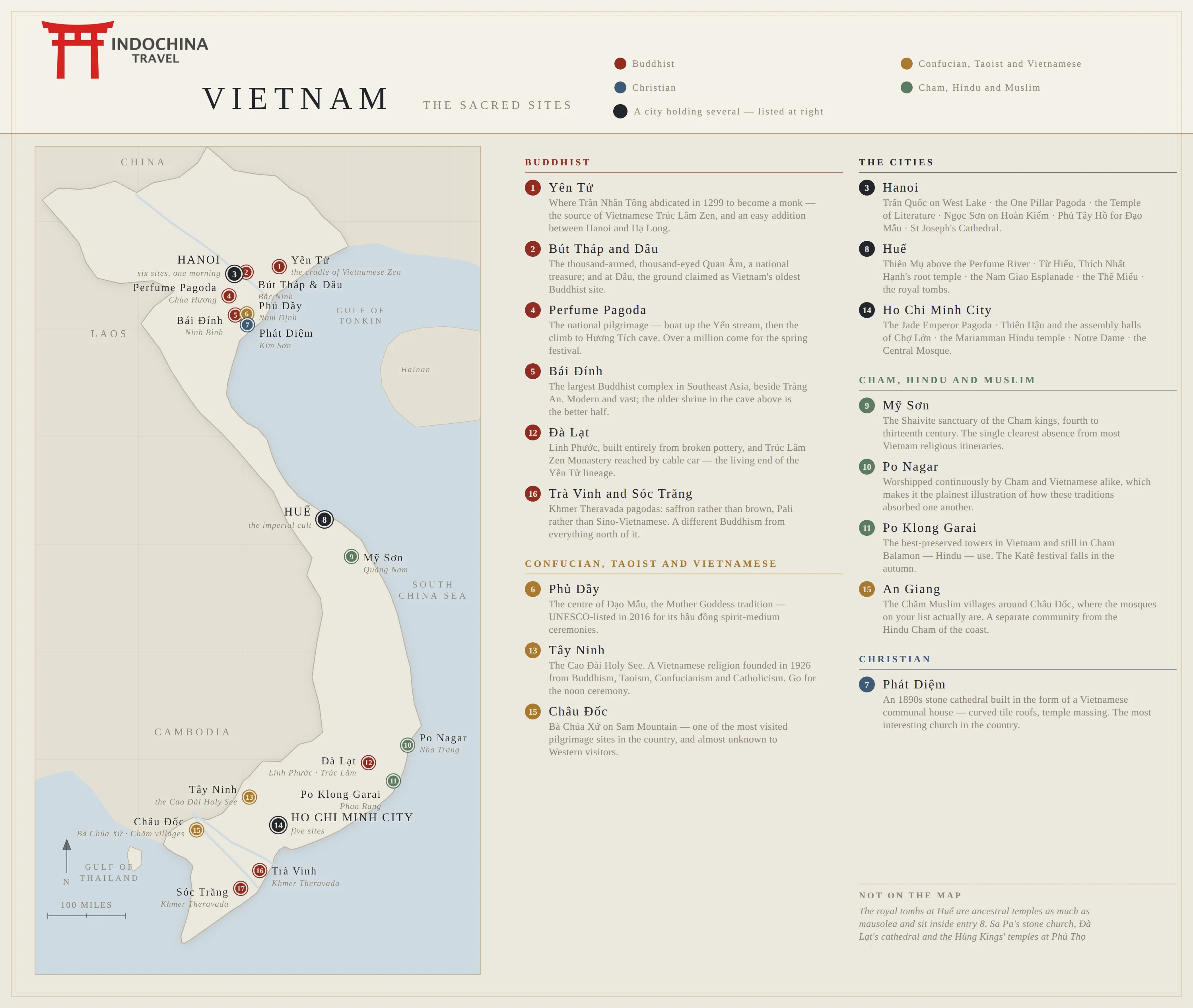
Vietnam's Key Temples, Sites, and Pagodas
Hanoi and the North
Trần Quốc Pagoda, Hanoi — The oldest pagoda in the city, founded in the sixth century on the bank of the Red River and moved to its islet on West Lake when the river threatened it. An eleven-tiered brick stupa rises beside a bodhi tree grown from a cutting of the tree at Bodh Gaya, sent by India in 1959. Ten minutes from the Phủ Tây Hồ shrine.
One Pillar Pagoda, Hanoi — Built in 1049 by an emperor who dreamed the goddess of mercy handed him a son, and designed as a single lotus rising from a pool. The French destroyed it as they withdrew in 1954; what stands is a faithful rebuilding. Note the pagoda is very small, and it takes but a few minutes to visit.
St. Joseph’s Cathedral, Hanoi — Consecrated in 1886, neo-Gothic, its twin towers weathered almost black. It stands on the site of the Báo Thiên Pagoda, one of the great temples of the Lý dynasty, which colonial administrators demolished to make room for it.
Temple of Literature (Văn Miếu) — Founded in 1070, Vietnam's first university, and the country's principal Confucian site. The most visited religious monument in Hanoi.
Perfume Pagoda (Chùa Hương) — The major national pilgrimage, about 40 miles southwest. Travel by boat up the Yến stream, then by cable car or on foot to Hương Tích cave. The festival runs from the sixth day of the first lunar month into March and draws well over a million pilgrims.
Ngọc Sơn Temple on Hoàn Kiếm — Taoist and Confucian layered together, and part of our Hanoi walking route.
Bút Tháp Pagoda (Bắc Ninh) — Home to the thousand-armed, thousand-eyed Quan Âm, a genuine national treasure and one of the finest pieces of sculpture in Vietnam. Tây Phương Pagoda nearby is known for the eighteen arhat figures. A day trip from Hanoi.
Yên Tử (Quảng Ninh) — The mountain where Emperor Trần Nhân Tông abdicated in 1299 to become a monk, and the cradle of Vietnamese Trúc Lâm Zen. Spiritually this UNESCO World Heritage candidate is the most significant site in the country. It lies between Hanoi and Hạ Long; you may stop here en route.
Bái Đính (Ninh Bình) — The largest Buddhist complex in Southeast Asia, and adjacent to Tràng An. Modern, vast, and aesthetically divisive; the older Bái Đính in the cave above is the better half.
Phát Diệm Cathedral (Ninh Bình) — The most interesting church in Vietnam by a distance. An 1890s stone cathedral built in the form of a Vietnamese communal house, with curved tile roofs and Buddhist-temple massing. If you visit one church, we recommend this one.
Huế
Thiên Mụ Pagoda — Founded in 1601 by the lord who would make the Nguyễn a dynasty, and crowned in 1844 by the seven-tiered Phước Duyên tower that has become the emblem of Huế. Behind the main hall sits the Austin motorcar that carried Thích Quảng Đức to Saigon in 1963, where he burned himself to death at a crossroads.
Từ Hiếu Pagoda — Thích Nhất Hạnh's root temple, where he returned in 2018 and died in 2022. For the Western traveler arriving with an interest in mindfulness, this is now the most meaningful site in Vietnam.
Nam Giao Esplanade (Đàn Nam Giao) — Where the emperors performed the sacrifice to Heaven. Austere, almost empty, and the key to understanding the Vietnamese imperial-religious system.
Thế Miếu inside the Citadel — The dynastic temple with the nine urns that travelers usually walk past as architectural dressing rather than ancestral religion, some with shrapnel scars from the war.
Từ Đàm Pagoda — Central in the 1963 Buddhist crisis.
Central Coast — the Cham Hindu Nation
Mỹ Sơn (UNESCO) near Hội An — The Shaivite sanctuary, fourth to thirteenth century. The temples were largely destroyed during the war and only a small number of structures remain.
Po Klong Garai (Phan Rang) — The best-preserved towers in Vietnam and still in active Hindu use; the Katê festival falls around September or October.
Po Nagar (Nha Trang) — Worshipped continuously by both Cham and Vietnamese, which makes it the clearest illustration of how these traditions absorbed each other.
Ho Chi Minh City and the South
Notre Dame Cathedral, Ho Chi Minh City — Built 1877–1880 with every material shipped from France, down to the Marseille brick that has never faded. Under heavy restoration for years now, with the completion date repeatedly pushed back.
Jade Emperor Pagoda (Chùa Ngọc Hoàng) — Taoist, 1909, smoke-blackened and crowded with carved figures. The most atmospheric religious interior in the city.
Thiên Hậu Temple in Chợ Lớn — And the Cantonese and Fujianese assembly halls around it. Chinese congregational religion, a unique tradition within Vietnamese society.
Mariamman Temple — Tamil Hindu, central, still active.
Cao Đài temples — A religion founded at Tây Ninh in 1926 out of Buddhism, Taoism, Confucianism, Catholicism, and French spiritism, with the Divine Eye above the altar and Victor Hugo among its saints. The Holy See at Tây Ninh is the highlight, and the noon ceremony specifically. Read more in the Cao Dai section on this page.
Mekong Delta
Chăm mosques — The Sunni Chăm villages of An Giang, reached by ferry across the Hậu River from Châu Đốc, where weaving and prayer still organize the week. Distinct from the Chăm Bani of Ninh Thuận, whose Islam absorbed local practice centuries ago, and distinct again from the Hindu Chăm of the same province.
Khmer Theravada pagodas at Sóc Trăng and Trà Vinh — This is a different Buddhism from everything north of it — Theravada rather than Mahayana, Khmer rather than Vietnamese, saffron rather than brown. Chùa Dơi, Chùa Kh'leang and the Clay Pagoda at Sóc Trăng; Ang Pagoda at Trà Vinh. For a traveler who has already done the Delta's markets, this is the reason to go back.
Bà Chúa Xứ at Sam Mountain, Châu Đốc — One of the most visited pilgrimage sites in the country, millions of pilgrims a year, and essentially unknown to Western visitors. Nearby are the Chăm Muslim villages of An Giang.
The Market Economy Shrine
On peak days, the shrine of Den Ba Chua Kho attracts up to a thousand visitors. Nicknamed "the market economy shrine," it lies east of Hanoi in Bac Giang province (formerly Ha Bac). A government ban on superstitious practices has not prevented a flourishing trade at the shrine. Pilgrims once visited it only in the spring, but since the early 1990s the turnout has been year-round. Supplicants bring trays of offerings to a dozen different altars in the temple, filled with the smoke of joss sticks. Among the offerings are beer, cigarettes, fruit, flowers, paper gold ingots, and bundles of imitation American $100 bills.
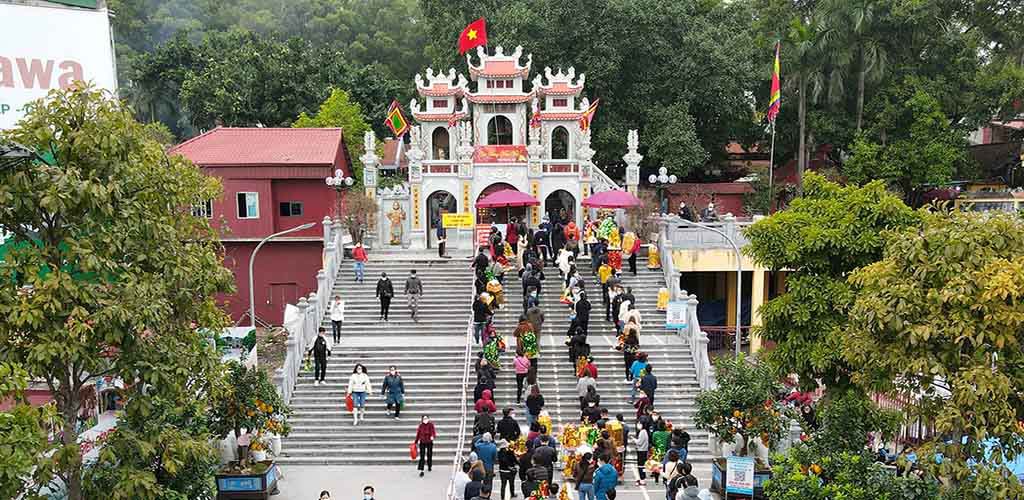
The 11th-century shrine was built in honor of Ba Chua Kho, a queen involved in heroic battles against the Chinese during the Ly dynasty. It's believed the queen acknowledges the wishes of supplicants, wielding the power to multiply their symbolic offerings into affluence. Thus, wishes for material possessions such as real estate or a new motorcycle can be granted.
Unfortunately, the queen hails from the pre-French era, and cannot read today's romanized Vietnamese script. So supplicants must rely on interpreters available on-site to translate their messages into Chinese characters, which the good queen can then read. Payment to cover the interpreter's service fee and a basic worship-materials package makes this a very costly place to worship, but visitors don't seem to care; they're elated to reach the shrine in person. Another curious industry here is the hiring of porters to visit Den Ba Chua Kho by those physically unable to reach it—most likely because they're too busy making money elsewhere.
War and the Zen Master
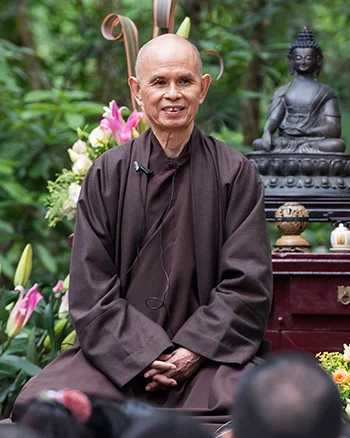 Zen master Thich Nhat Hanh, who passed away at the age of 95 in January 2022, was a spiritual revolutionary who brought Buddhism out of Vietnam and introduced it to the wider world. The author of more than 100 books, Nhat Hanh wrote extensively about the principles and everyday applications of Engaged Buddhism.
Earlier, Hanh played a major role in nonviolent opposition to the war in Vietnam. He was born in central Vietnam in 1926 and ordained a monk in 1942 at the age of 16. In 1964, along with a group of university professors and students, Thich Nhat Hanh founded the School of Youth for Social Service, an organization based entirely on Gandhian principles. Thousands of Buddhist monks, nuns, and lay people were ultimately shot or imprisoned for their work, which involved the creation of projects to help war victims, including teams of young people who journeyed to the countryside to build schools and health clinics or rebuild bombed villages.
Both suffering and happiness are of an organic nature, which means they are both transitory, always changing. The flower, when it wilts, becomes the compost. The compost can help grow a flower again. Happiness is also organic and impermanent by nature. It can become suffering and suffering can become happiness again.
In 1969, at the request of the Unified Buddhist Church of Vietnam, Thich Nhat Hanh set up the Buddhist Peace Delegation to the Paris Peace Talks. After the signing of the Paris Accords in 1973, he was refused permission to return to Vietnam, and settled in a small community southwest of Paris.
He is recognized as one of the greatest exponents of Theravada and Zen teachings. He was a prolific speaker and writer, and a tireless campaigner in a number of causes: assisting Vietnamese boat people; working with refugees in camps in Thailand, Malaysia, and Hong Kong; and applying the balm of Buddha's teachings to the psychologically damaged veterans of the Vietnam War. Handwritten copies of Thich Nhat Hanh's books are circulated illegally in Vietnam. Among his best-known meditation manuals are Peace Is Every Step and The Miracle of Mindfulness.
The Goddess of Mercy
 A very popular deity in Vietnamese Buddhism is Quan Am, modeled on the Chinese bodhisattva Guanyin, or Goddess of Mercy. Quan Am is a female form of Avalokitesvara, the masculine Hindu bodhisattva who personifies the virtue of compassion. At some point around a thousand years ago, Avalokitesvara underwent a transformation in China, emerging as Guanyin. The Vietnamese version of this quasi-folk legend is that Avalokitesvara made the great sacrifice of renouncing his chance at nirvana, choosing instead to return to Earth as Quan Am. The Vietnamese believe this transformation took place in the grotto shrine of the Perfume Pagoda near Hanoi.
Quan Am is usually sculpted as a standing all-white female figure holding a vase of holy water, and sometimes a willow branch for sprinkling the water of compassion onto mankind. In another version she holds her adopted son in one arm and stands on a lotus blossom. Quan Am looks remarkably like the Virgin Mary, or Madonna and Child, a similarity Western missionaries probably used to their advantage.
According to Chinese legend, Quan Am was unfairly thrown out on the streets by her husband, and took refuge in a monastery disguised as a monk. A woman unjustly accused Quan Am of fathering her son and then abandoning the child. Quan Am accepted the blame and took responsibility for the care of the child. She found herself once more on the streets, this time as a "father" with a "son." Only years later, when she was close to death, did she reveal her true female identity. The Emperor of China, hearing her story, made Quan Am the guardian spirit of mother and child. Quan Am is believed to have the power to bestow male offspring on believers, which explains her popularity. Childless couples and those without a son make offerings to her image.
Pagodas

Active places of Mahayana Buddhist worship in Vietnam are called pagodas, or chua. The Vietnamese pagoda is usually a single-storied structure with a bell tower, sacred pond, and yard at the front; a main building consisting of a front hall, central hall, and altar hall; and, at the back, living quarters for the monks or nuns, and perhaps some gardens. A multi-tiered Chinese-style pagoda sometimes stands on the grounds, generally housing sacred relics.
A Vietnamese pagoda is a community center of sorts. At festival time, pagodas are thronged with devotees and beggars and ablaze with incense. The grounds take on a carnival-like atmosphere. With its eclectic mix of Buddhism, Taoism, and Confucianism, the Vietnamese pagoda often functions in the area of wish-fulfillment; monks tell fortunes, sell talismans, and advise on house-construction location. Some pagodas are famed for statues of deities that can grant special wishes, such as pregnancy to infertile women. Another important function monks perform is to recite incantations at funerals. The pagoda becomes a repository for small funerary jars, each containing the ashes of the deceased with a photo and nameplate.
Iconography
Pagoda wall motifs often feature dragons, a divine and benevolent symbol formerly associated with the emperor. Dragons may be wrapped around columns, with forms ingeniously collaged from beer-bottle shards. Occasionally in a pagoda courtyard you'll find a dragon screen made of glazed tiles to deflect evil spirits. The dragon symbolizes power and is one of the four sacred animals of Chinese and Vietnamese mythology. The others are the phoenix, representing peace; the turtle, symbolizing long life; and the unicorn, representative of wisdom. These animals appear in paintings or statuary as temple guardians and bearers of good luck. Other common pagoda motifs include the Taoist yin-yang symbol—a circle split by an S-line—which symbolizes the fusion of opposites; and the reverse swastika, symbolizing the heart of Buddha, or long life. The Nazi swastika is based on this symbol, not the reverse. Common statuary in pagodas includes the following.
Buddhas: Mahayana Buddhists believe in a series of Buddhas, among them Amitabha, Buddha of the Past; Sakyamuni, the historical Buddha of this age; and Maitreya, Buddha of the Future. Some Buddha sculptures are massive efforts in sandalwood or bronze, weighing up to several tons. Another figure, the Laughing Buddha, usually represents a historic wandering Chinese monk, but is sometimes associated with the Maitreya Buddha.
Avalokitesvara: Mahayana adherents believe in a vast array of bodhisattvas, or enlightened beings. Avalokitesvara is the bodhisattva of compassion, usually represented with a forest of arms and multiple heads. The latter are supposed to have burst from the original head as a result of contemplating the suffering of human beings. At some point Avalokitesvara metamorphosed into a female form; in Vietnamese, this popular deity is known as Quan Am.
Chinese folk deities: Chinese-style pagodas are sometimes dedicated to Thien Hau, goddess of the sea and protector of sailors and fisherfolk. Another common figure in Chinese pagodas is Quan Cong, a deified Chinese general from the Three Kingdoms period (3rd century A.D.). Statuary depicts Quan Cong as red-faced with a long beard, sometimes astride a red horse, and flanked by companions General Chau Xuong and mandarin Quan Binh. Temple guardian statuary may take the form of Chinese warriors.
Buddhist Hybrids
In Vietnam, Confucian, Taoist, and animist beliefs are inextricably entwined with Buddhism. In fact, the Vietnamese refer to their faith as Tam Giao, the Triple Religion. In the Mekong Delta are exotic homegrown hybrids like Cao Dai and Hoa Hao Buddhism. Adherents of the sects do not believe in a superior being in the Abrahamic sense. Confucianism and Taoism are often referred to as Chinese folk religions.
Confucianism
 Confucianism is a code of ethics derived from the teachings of Chinese philosopher Confucius (551–479 B.C.). Confucianism was introduced to Vietnam by the Chinese to bolster their rule. Confucius promoted respect for authority and family elders and enshrined the concept of imperial rule through the Mandate of Heaven. The teachings emphasize the Three Bonds: loyalty of minister to emperor, son to father, and wife to husband. When the Vietnamese established their own dynastic line, Confucianism conveniently continued under the mandarins and the royal court. Confucius himself is often worshipped as a temple deity, such as at the Temple of Literature in Hanoi.
Ancestor Worship
Ancestor worship long predates Confucianism as an animist cult, but Confucianism reinforced and enhanced the practice. Ancestor worship hinges on the belief that the soul lives on after death and protects descendants, so descendants must pay homage to the spirit of the deceased and keep them informed of important changes. Pagodas often feature a section where memorial tablets and photos of the deceased are displayed, and many Vietnamese maintain an in-house family memorial altar where incense sticks are regularly lit.
Taoism
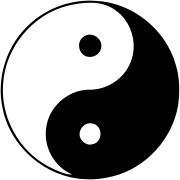 Taoism was introduced from China around the same time as Confucianism. It derives from the works of Chinese philosopher Lao Tzu (6th–5th centuries B.C.), and is based on the I Ching, or The Book of Changes. Taoism is similar to Confucianism but provides a spiritual dimension that Confucianism lacks. Taoist belief hinges on the concept of harmony, maintaining the balance between the contradictory forces of yin (female) and yang (male). The fusion of yin and yang in temporary harmony can provide people and things with a sense of direction. This fundamental law applies to just about anything: the family, the nation, or nature itself. Upsetting the yin-yang harmony leads to illness or tragedy. Taoist beliefs incorporate magic, alchemy, exorcism, faith healing, the search for immortality, and faith in spirits and ghosts. Because it functions in combination with Buddhism and Confucianism, it is not possible to give a figure for the number of adherents in Vietnam.
Cao Dai
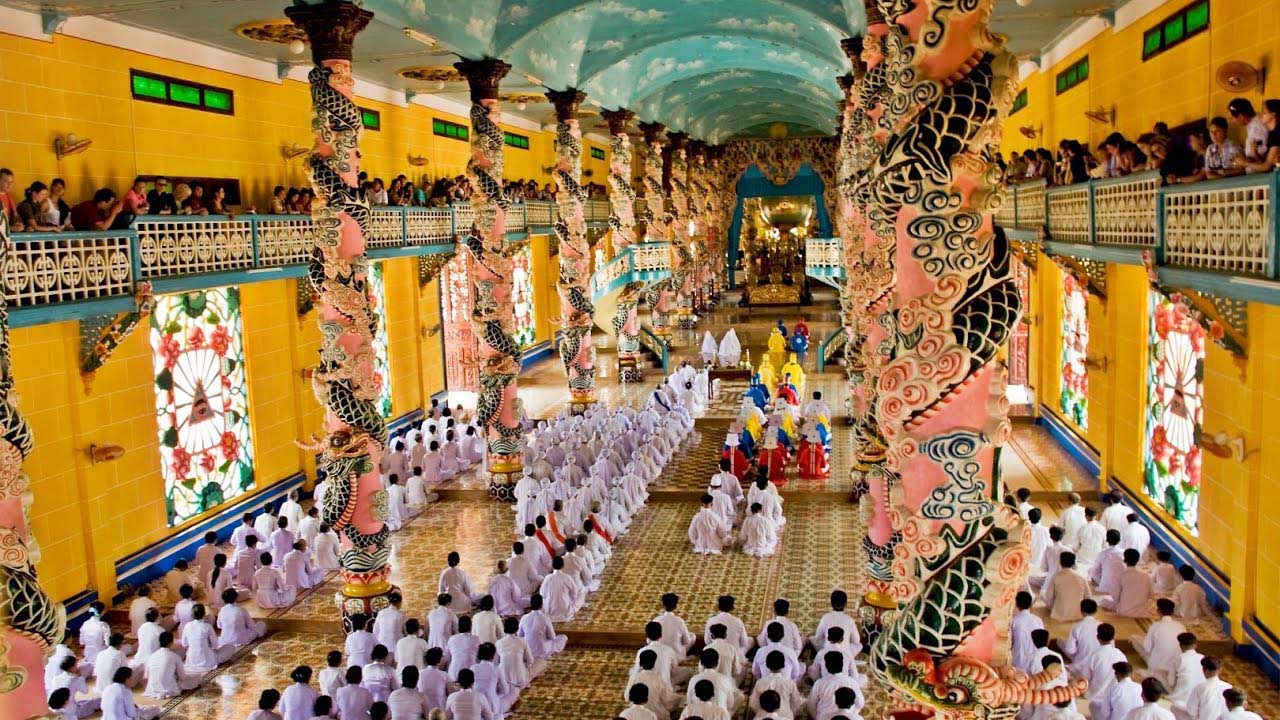
Cao Dai is a hodgepodge of Buddhism, Confucianism, Taoism, and Catholicism, with a bit of Islam thrown in. The founder of Cao Dai was Ngo Van Chieu, a civil servant who experienced visions in the mid-1920s that led him to declare his existence as the first Cao Dai Pope. The all-knowing Divine Eye, symbol of Cao Dai or the Supreme Spirit, occupies the central temple altar. In 1943 Ngo Van Chieu died and was succeeded by Pham Cong Tac, who was deported to the Comoros Islands by the French. He returned to Vietnam in 1946. When Ngo Dinh Diem came to power in the south in 1954, violent resistance from the Cao Dai and Hoa Hao sects was crushed, and Pham Cong Tac fled to Cambodia. Although Cao Dai lands were confiscated and the leadership disbanded after 1975, the temples were returned in 1985. The faith is now making a comeback, with an estimated 1,000 churches in the south and two million followers. The sect is particularly strong in the Mekong Delta. Cao Dai headquarters are at Tay Ninh, 96 kilometers northwest of Saigon. See our Cao Dai temple guide for visiting Tay Ninh.
Hoa Hao Buddhism
This militant sect was founded in the village of Hoa Hao in Chau Doc province in the Mekong Delta, led by the faith healer Huynh Phu So. The breakaway Buddhist movement gained 1.5 million adherents; the faith emphasizes simplicity of worship and places little stress on ritual or temple building. Hoa Hao followers were anti-French; when the Japanese invaded Vietnam, they were supported by Hoa Hao militia. In 1947 Huynh Phu So was killed by the Viet Minh for refusing to ally himself with the communists. As a result, Hoa Hao Buddhists became anticommunist. The tide turned in 1956 when a Hoa Hao leader was publicly guillotined by the Diem regime. Then elements of the Hoa Hao army sided with the Viet Cong. After 1975 the Hoa Hao army was disbanded. Today the stronghold of Hoa Hao Buddhism is Chau Doc near the Cambodian border.
Monarchy

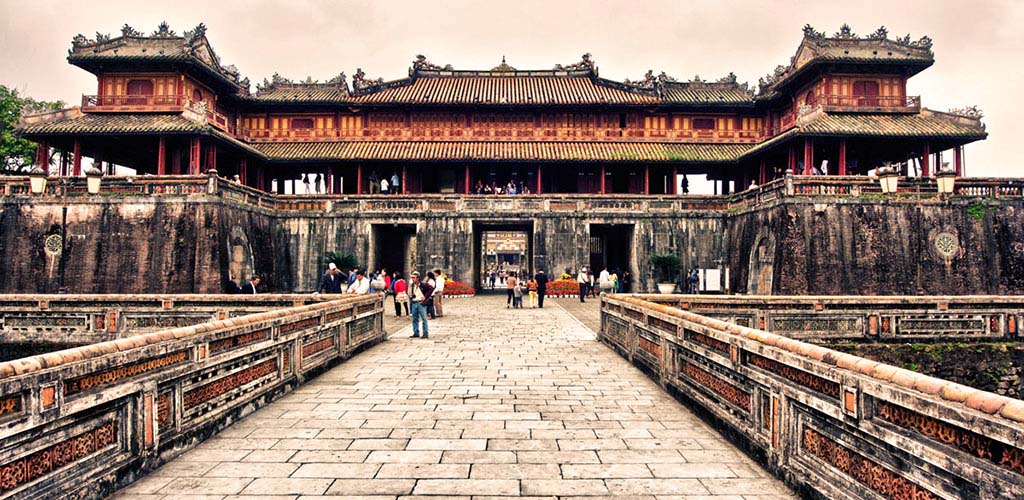
The monarchy in Vietnam has been traced from approximately 2900 B.C. to August 25, 1945, the end of World War II, the Nguyen dynasty being the most well known, which ruled the country largely independently from 1802 to 1884. During its existence, the empire expanded into modern-day southern Vietnam, Cambodia, and Laos through a continuation of the centuries-long Nam tiến and Siamese–Vietnamese wars. After 1883, the Nguyen emperors ruled nominally as heads of state of the French protectorates of Annam and Tonkin until the final months of World War II; they later nominally ruled over the Empire of Vietnam until the Japanese surrender. The dynasty notably erected a collection of magnificent tombs in the royal city of Hue, in central Vietnam.
Catholicism
Roman Catholic missionaries from France, Spain, and Portugal introduced Christianity to Vietnam in the 16th century. In the early 17th century, Portuguese Jesuits founded missions in Hanoi, Hoi An, and Danang. The mandarins perceived the Roman Catholic religion as a threat to their Confucian order of society. In the early 18th century a decree forbidding Christianity was enforced in the north; in the south, foreign missionaries were told to leave. Persecution of Catholics and Catholic missionaries led to the eventual conquest of the entire country by the French, though this seems to have been but a pretext for plundering the country's resources.
However, some resources (building materials for cathedrals) were brought in piece by piece. Gothic-style cathedral spires can be seen in Saigon, Dalat, Hue, and Hanoi. There are also Montagnard churches in places like Dalat and Kontum; Montagnards mix Christian and animist beliefs.

Under the French, the church wielded considerable power: the Catholic Church was once the country's biggest landowner. After 1954, Catholics moved south to the protection of the Diem regime. Because of strong Catholic support for the U.S. presence in southern Vietnam, the church was the target of a backlash after 1975. Foreign nuns and priests were expelled, seminaries and schools closed, church lands confiscated, and proselytizing forbidden.
About six million people, representing some 8 percent of the population, are thought to be Catholic; Vietnam has the second-largest Catholic contingent in Southeast Asia after the Philippines. The bulk of funding for the churches comes from Catholics in the United States and France. Although communication with the Vatican is restricted, in 1994 the Archbishop of Hanoi, Pham Dinh Tung, was allowed to go to Rome to be invested by Pope John Paul II in the Vatican's 120-member college of cardinals.
The Pope views Vietnam as a fruitful frontier, but Vietnam and the Vatican have been at loggerheads over religious freedom. The Vietnamese government insists on its right to veto all church appointments. In early 1995 Archbishop Paul Nguyen Van Binh, leader of the community in Saigon, died, and the Vatican's initial nomination was Bishop Nguyen Thuan, a nephew of former South Vietnamese President Diem. This nomination was rejected. The Vietnamese government is suspicious of the Vatican. Hanoi is concerned that elements of the Catholic community can be manipulated by external forces to act against the regime.
Other Faiths
Ethnic minorities in Vietnam adhere to a wide variety of beliefs. In addition to those already mentioned above are:
Protestantism: Over 300,000 Protestants live in Vietnam. The largest contingent is formed of Montagnards from the Central Highlands, who were converted by French and Portuguese missionaries. The religion was introduced in 1911. Churches are called Good News Churches (Tin Lanh).
Hinduism: In central Vietnam, descendants of the Cham follow Hindu and Brahman beliefs, worshipping the holy trinity of Shiva, the Destroyer; Vishnu, the Preserver; and Brahma, the Creator. A tiny Tamil community once existed in Saigon; a Hindu temple remains there, patronized by local Vietnamese and those of Indian origin.
Islam: In the 18th and 19th centuries, Cham descendants on the south coast and Mekong Delta converted to Islam. Muslim Cham, or Cham Bani, are easily distinguished by the preferred headgear of men: a crimson fez with a long golden tassel, or white Muslim prayer cap. In the Phan Rang area, men wear a white turban with red tassels. The largest Cham mosque stands in Chau Doc in the Mekong Delta.
Animism: Although superstitious practices are banned by the communist government, spirit worship is well entrenched among hill-tribe groups. Animists believe powerful spirits residing in forests, rocks, streams, wind, and rain must be appeased by gifts of food, flowers, and incense. Spirits can also live in animals. The Mnong tribespeople of the Central Highlands, famed as elephant catchers, practice elephant-spirit worship.
Religion in Daily Life in Vietnam
In Vietnam, religion is not confined to temples or special dates, but is woven into everyday life. Spiritual beliefs and rituals are common whether in busy cities or rural villages and form much of the basis for social customs.
At Home
In the home of every Vietnamese family you'll notice a prominent ancestral altar which serves as the spiritual heart of the house. These altars are prepared with fresh flowers, fruit, candles, food, and drink offered, and incense is burned daily to honor deceased relatives. Guidance and blessings are often sought at these altars for life events such as weddings, echoing the Confucian value of piety, but also the gratitude of Buddhism and harmony between living and dead in Taoist traditions.
In Work and Business
In many Asian cultures—particularly within Chinese folk religion, Taoism, and Buddhism—it is highly common for shops, restaurants, and offices to feature small altars dedicated to the God of Wealth (Cai Shen) and the Earth God (Tudi Gong) to bring prosperity and protection to the business. Similar to home altars, every morning, owners light incense and place offerings such as fruit, rice wine, and cigarettes to invite prosperity.
In Community and Festivals
During festivals, crowds gather at pagodas during Vu Lan (Ghost Festival) to pray for their parents’ souls, or during Tet (Lunar New Year) to welcome ancestors back home. These rituals combine Buddhist prayer, Confucian family devotion, and Taoist cosmology, again reflecting the blend of the three religions. In Vietnam, even non-religious celebrations often have spiritual undertones such as offering food before a journey, avoiding unlucky days for weddings or house moves, or consulting the lunar calendar for auspicious dates.
In Modern Life
While many young Vietnamese today live in modern, globalized cities, religion still quietly shapes their values. Concepts like karma, merit, and respect for elders still influence contemporary behavior. Acts of charity, kindness to animals, and gratitude to parents are seen not just as good manners, but as spiritual duties. In general, Vietnam’s spirituality is subtle yet omnipresent, not requiring strict worship, but it guides moral life and preserves cultural values. This balance between tradition and modernity makes Vietnam’s religious culture both dynamic and deeply humane.
Experiencing Vietnam's Religions
Immerse yourself in Vietnam’s spiritual heritage through authentic experiences:
- Local festivals: Visit during Tết or Vu Lan to witness rituals of gratitude and renewal.
- Celebrate your marriage vows with a private Buddhist blessing at a temple in Hanoi (below).
Ready to experience the religions of Vietnam in person? We take you to places, organize experiences, and introduce you to local people that no one else does. Whether celebrating an anniversary, honeymoon, or planning a family journey, our trips offer unforgettable experiences in Vietnam, the Land of Nine Dragons. Contact us to include temple visits, festivals, or a Cao Dai ceremony in your itinerary.